

Switch 2 Game Key Cards are Nintendo’s newest method for distributing select titles — and they’ve now explained the reasoning behind the format. These physical-style boxes contain a digital download code instead of a cartridge, sparking discussion among fans and collectors.
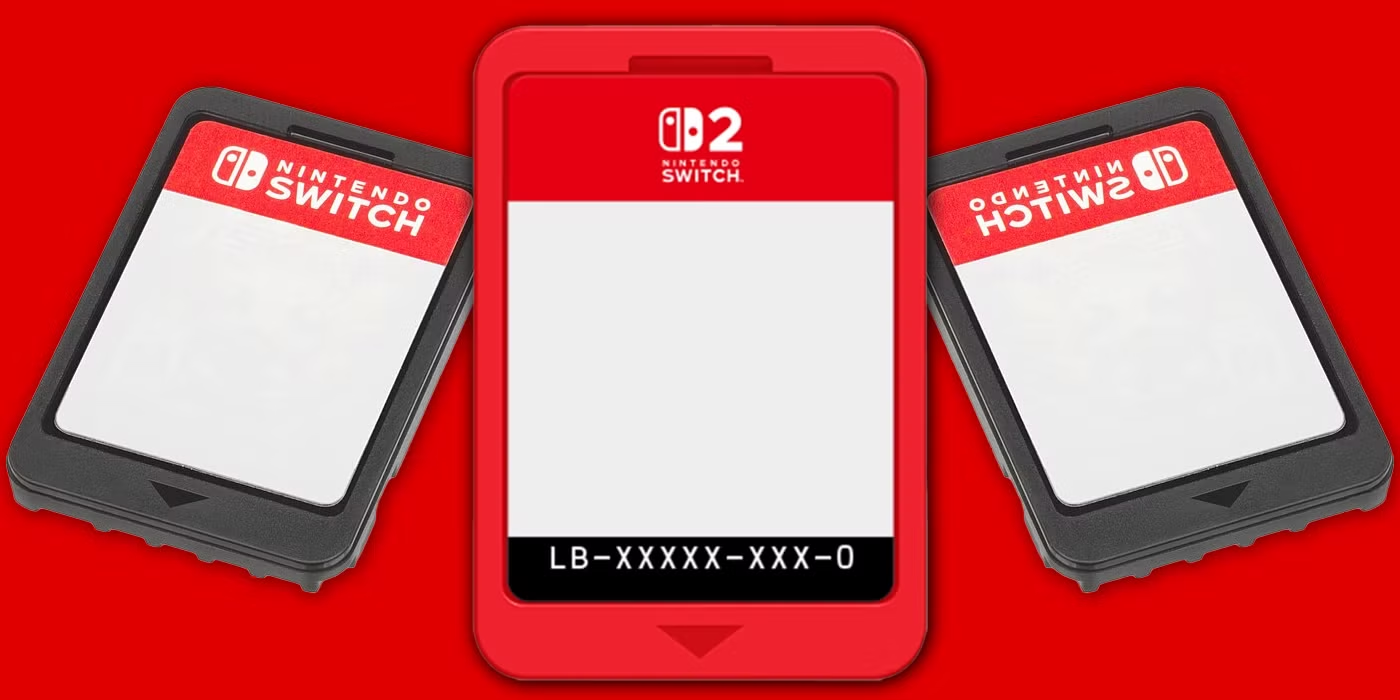
The move has stirred mixed reactions from collectors and fans of physical media, with many asking: If it’s still a box, why is there no cartridge?
🎮 Suggested Reading
Why Game Key Cards Exist
According to a statement reported by Nintenderos, Nintendo designed the Game Key Card system as a cost-saving and logistical strategy. These cards provide a download code printed on a small, credit card–style insert that ships in a traditional Switch game case.
“Game Key Cards give players a shelf-ready product while keeping production flexible for smaller print runs,” the company explained, adding that they’re primarily aimed at indie games, ports, and digital-first releases that wouldn’t warrant a full manufacturing cycle.
How They Differ from Standard Cartridges
- 📦 Same packaging, no physical game: There’s still a case and spine artwork, but inside is a code.
- 🔓 No resale or trade-in: Unlike physical cartridges, Game Key Cards are single-use and locked to a Nintendo Account.
- 📉 Lower production costs: Especially helpful for devs who want physical presence without high upfront fees.
While many players appreciate the boxed aesthetic, others see the system as a half-step between physical and digital — raising concerns about preservation and ownership.
What Games Are Using Game Key Cards?
Several titles launching on Switch 2 will use this system:
- 🎮 Street Fighter 6 (Switch 2 Edition)
- 🎮 Cyberpunk 2077 (Digital card for physical bundle)
- 🎮 Clair Obscur: Expedition 33 (indie RPG rumored to use GKC)
Nintendo has stated that all major first-party releases — including Mario Kart World and Zelda: Echoes of Wisdom — will still ship on standard physical cartridges.
Final Thoughts
Nintendo’s Game Key Cards might not replace cartridges entirely, but they’re clearly part of a growing shift. Whether you see them as a compromise or a collector-friendly digital bridge, they show how publishers are adapting physical media to fit a hybrid future.
🔗 Related: Read our deep dive into physical media on Switch 2 and what the future of boxed games might look like.
